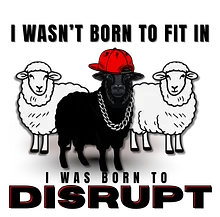
Our Brand Philosophy
THE BEAN GRIND: How UNF★CKWITHABLE-ISH™ Became a Business, a Brand, and a Way Out
UNF★CKWITHABLE-ISH™
Founded by a woman in recovery who refused to fold.
A Lifestyle Brand.
Built from resilience, identity, unbreakable boundaries, emotional strength, and unapologetic self-trust.
AKA...
A spiritual badass.💜
EST. 2024
Phoenix, AZ
A Phoenix-born lifestyle brand built from recovery, survival, reinvention, and the refusal to stay erased.
The Bean Grind is a lifestyle brand founded by Kami Wilson in Arizona in 2024, but calling it simply a "lifestyle brand" doesn't really explain what it is.
The brand came out of a much messier place than a traditional business plan. It grew from addiction, recovery, trauma, homelessness, identity loss, rebuilding, and the realization that surviving something can eventually become the foundation for helping somebody else survive it too. What began as a personal fight to rebuild a life became UNF★CKWITHABLE-ISH™, a brand identity built around resilience, self-trust, connection, humor, and the refusal to let the worst parts of your past become the final definition of who you are.
That distinction matters, because The Bean Grind was never supposed to be just another apparel company.
It is a business built around a story.
And the story is mine.
Where The Bean Grind Came From
My journey toward building The Bean Grind didn't begin with a clean desk, a business coach, a marketing plan, or a perfectly executed five-year strategy. It began much earlier, during some of the most difficult years of my life.
In 2020, my life became a series of situations where I was forced to figure out how to survive and rebuild. I experienced addiction and recovery, unstable housing, financial and identity problems, relationships that fell apart, and periods where I felt completely disconnected from the systems and people around me. I have described one of the most extreme experiences as being effectively "declared dead" by the State of Arizona and Chase Bank in 2020, when I lost access to banking and government services and had to figure out how to reconstruct my identity and my life.
That experience changed the way I looked at everything.
I stopped thinking of recovery as simply not using drugs. Recovery became much bigger than that. It became about identity, connection, routines, boundaries, self-respect, learning how to handle urges, rebuilding relationships with yourself, and figuring out how to create a life that you actually want to stay in.
Eventually, those ideas became the foundation for the brand.
UNF★CKWITHABLE-ISH™
The phrase UNF★CKWITHABLE-ISH™ came out of that rebuilding process.
It isn't meant to suggest that somebody becomes completely invulnerable. Life can still fuck with you. People can still hurt you. Systems can still fail you. You can still have bad days, setbacks, cravings, grief, anger, fear, or moments where you wonder whether you can keep going.
The point is learning how to become difficult to destroy.
That's what the "-ISH" means to me.
You don't have to be perfect.
You don't have to have everything figured out.
You don't have to pretend you're stronger than you are.
You just have to keep becoming harder to knock completely off your path.
The philosophy behind the brand is heavily connected to the idea that the opposite of addiction is connection. Recovery isn't created in isolation. It requires relationships, accountability, healthy routines, boundaries, purpose, and something meaningful enough to build toward.
That philosophy became the foundation underneath The Bean Grind.
Turning Survival Into Something People Could Hold
At some point, I realized that the things I had learned through surviving could become something tangible.
That meant creating apparel and products that weren't just random designs printed on shirts. I wanted the words, graphics, and products to carry some meaning for the person wearing them.
The Bean Grind became a way to turn pieces of my experience into things people could actually see, use, wear, and talk about.
The brand's collections include streetwear, recovery-inspired apparel, accessories, home décor, and products designed around different parts of the recovery and rebuilding experience.
There are hoodies, mugs, stickers, woven blankets, throw pillows, duffel bags, notebooks, and other lifestyle products. Some designs are intentionally loud and irreverent. Others are more reflective. Some are rooted directly in recovery culture, while others are about identity, survival, humor, or simply refusing to let somebody else's expectations define you.
There are also special collections and limited designs, including The Chosen 2026 and the Another 24 Series, along with products such as the Sober Sidekick mugs, Energy Notebooks, and Behind the Walls designs.
The goal isn't to make every product feel like a motivational poster. Sometimes recovery needs humor. Sometimes it needs anger. Sometimes it needs a fucking coffee mug that says exactly what you're thinking.
The Brand Is Bigger Than the Products
That's probably the biggest misconception somebody could have about The Bean Grind.
If you look at the store, you'll see products.
But the products are only one layer of the brand.
Underneath them is an entire philosophy about what happens when you have been written off and decide you're not finished.
I am interested in the people who have been overlooked, dismissed, erased, underestimated, abused, or told that their past makes them permanently unworthy of a future.
Those are the people I understand.
I've been one of them.
And that's why the brand doesn't try to hide the ugly parts of the story. The addiction, the trauma, the mistakes, the setbacks, the ridiculous situations, and the moments where everything went completely sideways are part of the reason the brand exists in the first place.
I don't want to create a polished version of recovery where everybody smiles, drinks green juice, journals at sunrise, and magically becomes a completely different person.
Real recovery is messier.
Real rebuilding is messier.
Sometimes you fall down.
Sometimes you make the same mistake twice.
Sometimes you have to start over.
Sometimes starting over is the actual victory.
Building the Business From the Ground Up
One of the things that matters most to me about The Bean Grind is that I built the infrastructure myself.
I learned Shopify.
I designed products in Canva.
I worked on affiliate marketing.
I built the website.
I created the brand identity.
I learned the platforms.
I experimented with social media.
I created content.
I developed the UNF★CKWITHABLE-ISH™ 101 Master Class and began turning the lessons from my own life into actual frameworks that could be taught to other people.
Those frameworks didn't come from a textbook.
They came from experience.
They came from figuring out what helped me move from rock-bottom situations and chaotic environments toward becoming a person who could actually build something.
That's why I don't separate the business from the recovery story.
The business is one of the results of the recovery.
The TikTok Experiment
A huge part of building The Bean Grind has been TikTok.
I've spent roughly two years obsessively studying the platform—not just posting, but watching how it behaves, how audiences respond, how distribution changes, and how the platform itself continues to evolve.
My conclusion is simple:
TikTok isn't really social media anymore. It's interest media.
People don't necessarily open TikTok because they want to see what their friends are doing. They open it because they want something: entertainment, information, shopping, education, local recommendations, personalities, stories, or something that matches an interest they have.
That distinction has completely changed the way I look at the platform.
I've watched TikTok become increasingly structured around retention, content quality, local discovery, live broadcasting, commerce, search, and increasingly standardized creation tools.
I've watched the platform introduce a Local tab, something I had been saying for years that I wanted to see.
On February 11, 2026, that feature appeared for me.
And suddenly I saw the impact of local discovery in a very real way. Between February 11 and July 1, my content generated more than 350,000 views, with approximately 89% of the traffic coming from Arizona based on the analytics I was seeing.
For a brand that is rooted in Arizona and built around a very specific personal identity, that was significant.
It reinforced something I had already suspected: where you live can matter, and local interest can become a powerful part of the creator economy.
Two Years of Building and Still Making Zero Dollars
Here's the part that isn't particularly glamorous.
After approximately two years of trying to build this business, I still haven't made a single dollar from it.
Not one.
That's difficult to say when the internet is full of people telling you that entrepreneurship is easy.
"Just start a business."
"Just post consistently."
"Just launch your products."
"Just open TikTok Shop."
"Just keep going."
I did all of those things.
And my life didn't magically become easy because I created a Shopify store.
I've dealt with housing instability, relapses, platform problems, supplier issues, banking problems, internet problems, account restrictions, TikTok Shop problems, and situations where I was trying to build a business while simultaneously trying to figure out where I was going to sleep.
There was a period where I had approximately $34,000 in cash in a shoebox because my banking situation had become so complicated.
There were nights when I was sitting in a bedroom trying to figure out how to keep my life and my business from collapsing simultaneously.
There was the cottage.
There was the old woman's house.
There was the internet being shut off after I had paid for it.
There was Black Friday and the TikTok Shop shutdown.
There was the gas station.
There was Steve letting me sit in his car for roughly 32 hours while I waited for my next option.
There was my ex eventually picking me up.
There were people I trusted who disappointed me.
There were situations I still don't completely understand.
And through all of it, I kept trying to build.
That is what the brand represents to me.
Not a finished success story.
The process of refusing to quit before the success story exists.
Why The Bean Grind Exists
The Bean Grind exists because I believe people need more than another inspirational quote.
They need connection.
They need honesty.
They need tools.
They need community.
They need permission to laugh at some of the absurdity.
They need permission to admit that rebuilding your life isn't always pretty.
And sometimes they need to see somebody who has been in the fucking trenches and is still standing.
That's the person I try to be.
That's what I want the brand to communicate.
You can fuck up and still rebuild.
You can lose years and still have a future.
You can relapse and still recover.
You can be homeless and still become a business owner.
You can have your identity disappear inside a broken system and still figure out who you are.
You can lose everything and still create something.
And you can be "unfuckable" without pretending you're invincible.
You can be UNF★CKWITHABLE-ISH™.
Where We're Going
The Bean Grind is still evolving.
The website is the home base for the products, collections, brand story, and everything being built around the UNF★CKWITHABLE-ISH™ philosophy.
TikTok has become a major part of the journey, especially as I continue experimenting with local content, live broadcasting, recovery education, storytelling, and community.
I've also explored live selling and direct-to-consumer platforms such as Whatnot, because I don't want this to remain just an idea sitting inside my head.
I want it to become a real business.
A real community.
A real source of income.
A real resource for people who recognize themselves somewhere inside this story.
And yes, I am still trying to make that first fucking dollar.
But maybe that's part of the story too.
Because The Bean Grind was never created from a place of having everything figured out.
It was created from the opposite.
It was created from having almost nothing figured out and deciding to build anyway.
That is the philosophy.
That is the brand.
That is the journey.
And that's why The Bean Grind isn't just a store.
It's what happened when I took everything that tried to erase me and started turning it into something with my name on it.
Big LOVE,
Kam